If you’ve ever picked up a Pokémon card and thought, “Huh, this thing feels kinda tiny but somehow perfect,” you’re not alone. I remember opening my first booster pack as a kid, trying so hard not to bend the cards while sliding them out.
Funny enough, I didn’t care about measurements back then. I just wanted to see if there was a Charizard hiding inside. Years later, after collecting, trading, and sleeving hundreds of cards, I realized that the exact Pokémon Card Size matters much more than most people think.
Whether you’re a new collector, a competitive Pokémon Trading Card Game (TCG) player, or someone sorting through an old shoebox of cards from childhood, understanding card dimensions helps you protect your collection,
choose the right accessories, and even spot fake cards. It sounds like a tiny detail, but its honestly one of those little things that quietly makes everything easier.
In this guide, we’ll explore the official measurements, card materials, storage options, authentication tips, and much more. By the end, you’ll know exactly why Pokémon cards are made the way they are and why that consistency has remained almost unchanged for decades.
| Feature | Specification |
|---|---|
| Standard Size | 2.5 × 3.5 inches |
| Metric Size | 63.5 × 88.9 mm |
| Thickness | ~0.305 mm (0.012 in) |
| Weight | ~1.78 grams |
| Aspect Ratio | 5:7 |
| Corner Radius | ~3.18 mm |
| Material | Multi-layer printed cardstock |
| Sleeve Compatibility | Standard-size sleeves |
| Binder Compatibility | Standard 9-pocket binders |
| Oversized Cards | ~5 × 7 inches (promo only) |
What Is the Official Pokémon Card Size?
The official Pokémon Card Size is 2.5 × 3.5 inches (63.5 × 88.9 mm). These dimensions have been the standard for the modern Pokémon TCG since its early years, allowing cards to fit perfectly into sleeves, binders, and tournament-approved accessories.
That size isn’t random either. It’s known as the standard trading card format and is also used by several other popular card games. Because manufacturers around the world follow these dimensions, collectors can confidently buy accessories without worrying about compatibility. Its one of those standards that people barely notice until something doesn’t fit.
The cards also use a 5:7 aspect ratio, which gives them a balanced appearance. This proportion allows artwork, game text, and statistics to fit comfortably without making the card feel crowded.
Pokémon Card Dimensions Explained
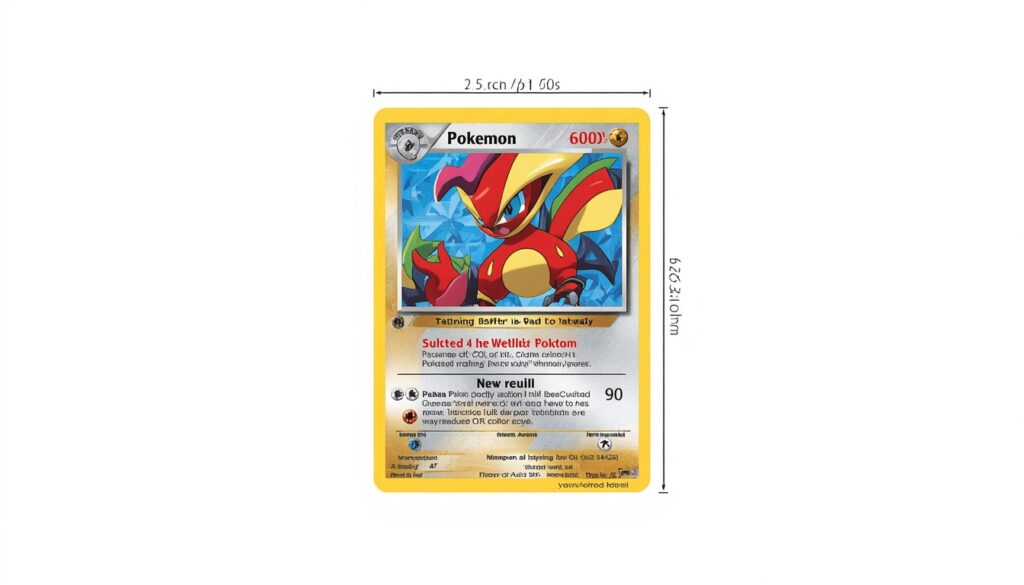
When people search for Pokémon card measurements, they’re often looking for more than just the height and width. A standard Pokémon card includes several physical specifications that contribute to its feel and durability.
Here are the official measurements:
- Width: 2.5 inches (63.5 mm)
- Height: 3.5 inches (88.9 mm)
- Thickness: Approximately 0.012 inches (0.305 mm)
- Weight: Around 1.78 grams
- Aspect Ratio: 5:7
- Corner Radius: Approximately 3.18 mm
These numbers might seem oddly specific, but they’re important. Tournament organizers, grading companies, and accessory manufacturers all rely on these standards to maintain consistency across millions of cards.
Why Pokémon Cards Are This Size
It’s easy to assume that Pokémon cards were simply made small enough to fit into your pocket. The real reason goes much deeper.
The standardized size makes cards easy to shuffle, comfortable to hold, and efficient to manufacture. During competitive matches, players constantly draw, shuffle, and organize their decks. Even tiny differences in size could affect gameplay fairness.
Imagine trying to shuffle a deck where every few cards were slightly taller. It would be frustrating…and honestly a bit of a mess.
Standardized dimensions also make international tournaments possible. A card printed in Japan, Europe, or North America follows nearly identical physical standards, ensuring fairness across regions.
Pokémon Card Materials and Build Quality
A genuine Pokémon card isn’t made from ordinary paper. Instead, it uses printed cardstock built from multi-layer paperboard, giving it durability and flexibility at the same time.
Each card includes multiple compressed layers that provide strength while keeping the card lightweight. Authentic cards usually feel firm but not overly stiff. If a card feels unusually glossy, paper-thin, or excessively thick, it deserves a closer look.
Holographic cards add another layer of complexity. Premium foiling techniques create reflective surfaces without dramatically changing the card’s dimensions. That’s why a holographic Charizard still fits perfectly inside the same sleeve as a common Energy card.
Different Types of Pokémon Cards
Although every standard Pokémon card shares the same physical size, their functions vary considerably.
Some of the most common categories include:
- Basic Pokémon
- Evolution Pokémon
- Trainer Cards
- Item Cards
- Supporter Cards
- Stadium Cards
- Energy Cards
- Special Energy Cards
Each category serves a unique purpose during gameplay, yet every card maintains identical measurements. Thats actually pretty clever because players never need special sleeves or deck boxes for different card types.
Pokémon Card Size and Competitive Play
Competitive tournaments rely heavily on consistency.
Every official deck contains exactly 60 cards, and those cards must have identical physical dimensions. Even slightly oversized or trimmed cards could unintentionally reveal information while shuffling, which would compromise tournament integrity.
This is one reason tournament judges carefully inspect decks before major events. Standardized dimensions help maintain fairness for everyone involved.
Many players also use identical card sleeves during tournaments so every card has the same appearance from the back. Even a tiny scratch on one sleeve can sometimes require replacement before play begins.
Choosing the Right Sleeves for Pokémon Cards
Buying sleeves sounds simple…until you discover there are dozens of options.
Since Pokémon cards measure 63.5 × 88.9 mm, sleeves designed for standard trading cards fit perfectly.
Common options include:
- Penny sleeves for inexpensive storage
- Premium sleeves for tournaments
- Matte sleeves for reduced glare
- Glossy sleeves for brighter artwork
- Double-sleeving for valuable collectibles
Penny sleeves are affordable and ideal for bulk collections. They’re made from soft polyethylene and provide basic protection against dust and fingerprints.
Premium sleeves, often made from polypropylene, offer better durability and smoother shuffling. Many competitive players prefer them because they last longer under frequent use.
In the next part, we’ll cover storage solutions, binders, toploaders, oversized Pokémon cards, grading, spotting fake cards, comparisons with Magic: The Gathering and Yu-Gi-Oh!, FAQs, and practical collecting tips.
The Best Binders and Storage Solutions for Pokémon Cards

A collection has this funny habit of growing when you’re not looking. One week you’ve got twenty cards sitting neatly on a desk, and a couple months later there’s stacks on shelves, booster wrappers in drawers, and somehow an Elite Trainer Box (ETB) full of duplicates. It happens, trust me.
Keeping cards protected starts with choosing the right storage. Since the official Pokémon Card Size is 2.5 × 3.5 inches (63.5 × 88.9 mm), most standard trading card accessories fit perfectly.
Popular storage options include:
- Side-loading card binders
- Nine-pocket binder pages
- Premium binder pockets
- Deck boxes
- Plastic storage cases
- Toploaders for valuable cards
- Display frames for favorite collectibles
Side-loading binders are often preferred because cards are less likely to slide out if the binder is carried around. A ringless binder also reduces the risk of cards bending near the center, which is a mistake plenty of collectors make without even realizing it.
For high-value cards, many collectors first place the card in a penny sleeve before inserting it into a rigid toploader. This combination protects against scratches, corner damage, and accidental bending.
Why Card Thickness and Weight Matter
Most collectors pay attention to artwork first. Serious collectors eventually start paying attention to weight and thickness too.
A genuine Pokémon card typically measures around 0.305 mm (0.012 inches) thick and weighs approximately 1.78 grams. Tiny manufacturing differences can occur, but significant deviations may raise questions about authenticity.
Professional grading companies often inspect these physical characteristics alongside printing quality, corners, centering, and surface condition.
Oddly enough, you can sometimes tell something feels “off” before you can explain why. A fake card may feel unusually flimsy or strangely heavy. It’s not always obvious, but experienced collectors notice these little details pretty quick.
How to Spot Fake Pokémon Cards
Counterfeit cards have become more convincing over the years, but many still reveal themselves through careful inspection.
Here are some common warning signs:
- Incorrect dimensions
- Poor print alignment
- Blurry text
- Unusual colors
- Incorrect fonts
- Missing texture on modern holographic cards
- Different cardstock quality
- Noticeably different weight
- Extremely glossy finish
One famous example involves fake Holographic Charizard cards. Because Charizard is one of the most valuable and recognizable Pokémon, counterfeit versions appear frequently in online marketplaces.
A genuine holographic card usually displays crisp printing and clean foil patterns. Fake versions often have washed-out colors, pixelated artwork, or foil covering areas that shouldn’t be reflective.
Comparing a questionable card with a confirmed authentic one is often the easiest first step.
Jumbo and Oversized Pokémon Cards
Not every Pokémon card follows the standard size.
Promotional products occasionally include oversized Pokémon cards, often called jumbo cards. These are designed mainly for display rather than gameplay.
You’ll often find jumbo cards inside collector boxes celebrating special Pokémon or major expansions. They feature the same artwork as the regular version but on a much larger canvas.
Because they’re much bigger than normal cards, jumbo cards don’t fit standard sleeves, binders, or tournament decks.
Collectors usually store them in specially designed display cases or oversized binders made specifically for promotional cards.
Pokémon Card Size Compared With Other Trading Card Games
One question comes up surprisingly often:
“Are Pokémon cards the same size as other trading cards?”
The answer depends on the game.
Pokémon vs. Magic: The Gathering
Magic: The Gathering uses the same standard trading card dimensions:
- 2.5 × 3.5 inches
- 63.5 × 88.9 mm
That means many sleeves, binders, deck boxes, and storage products work for both games.
Pokémon vs. Yu-Gi-Oh!
Yu-Gi-Oh! cards are slightly smaller.
Their dimensions are approximately:
- 2.32 × 3.37 inches
- 59 × 86 mm
Because of this, Yu-Gi-Oh! sleeves are too small for Pokémon cards. It’s a small difference, but you’ll notice it immediately if you try forcing a Pokémon card inside.
Pokémon vs. KeyForge
KeyForge also uses the standard trading card size, making accessories largely interchangeable with Pokémon and Magic collections.
Knowing these differences can save money and avoid buying sleeves or binders that simply don’t fit.
Why Standardization Matters
Imagine attending a tournament where everyone’s cards had different sizes.
Shuffling would feel awkward.
Decks wouldn’t stack evenly.
Marked cards would become a serious issue.
Standardized dimensions solve all those problems while making manufacturing, grading, storage, and gameplay much easier.
This consistency has helped the Pokémon Trading Card Game (TCG) remain one of the world’s most successful collectible card games since the Pokémon Base Set (1996).
Sometimes the smallest design decisions end up lasting the longest.
Tips for Protecting Your Pokémon Card Collection

Looking after your cards doesn’t require expensive equipment. Good habits often matter more than fancy accessories.
A few practical tips include:
- Wash and dry your hands before handling valuable cards.
- Store cards away from direct sunlight to reduce UV damage.
- Keep collections in a cool, dry room.
- Sleeve valuable cards immediately after opening booster packs.
- Avoid stacking heavy objects on top of binders.
- Use toploaders for rare or expensive cards.
- Consider professional grading for exceptionally valuable collectibles.
One card cared for properly can look nearly new even after decades. Another treated carelessly may lose much of its value within weeks. It’s kinda amazing how much difference simple habits can make.
Frequently Asked Questions
What size are Pokémon cards?
Standard Pokémon cards measure 2.5 × 3.5 inches (63.5 × 88.9 mm).
Are Pokémon cards standard size?
Yes. They follow the standard trading card dimensions used by several major trading card games.
What sleeves fit Pokémon cards?
Standard-sized trading card sleeves, including penny sleeves and premium sleeves, fit perfectly.
How thick is a Pokémon card?
Most authentic cards are approximately 0.305 mm (0.012 inches) thick.
How much does a Pokémon card weigh?
A standard card weighs about 1.78 grams, although very small production differences may occur.
Are jumbo Pokémon cards tournament legal?
No. Jumbo promotional cards are intended for display and collecting rather than official gameplay.
Can I use Magic: The Gathering sleeves?
Yes. Since both games share the same card dimensions, standard sleeves designed for Magic also fit Pokémon cards.
pokemon card dimensions
Pokémon cards have standard dimensions of 2.5 × 3.5 inches (63.5 × 88.9 mm). This universal size ensures compatibility with sleeves, binders, and tournament play.
pokemon card size
The official Pokémon card size is 2.5 × 3.5 inches, making it the same standard used by most collectible trading card games. This consistency supports easy handling and storage.
size of pokemon cards
The size of Pokémon cards is standardized at 2.5 × 3.5 inches (63.5 × 88.9 mm). It provides the ideal balance between artwork visibility, gameplay, and durability.
what size are pokemon cards
Pokémon cards measure 2.5 inches wide by 3.5 inches tall (63.5 × 88.9 mm). Their standardized dimensions allow them to fit perfectly in protective sleeves and card binders.
how big is a pokemon card
A standard Pokémon card is 2.5 × 3.5 inches (63.5 × 88.9 mm) in size. This compact format makes the cards easy to shuffle, collect, and use in the Pokémon Trading Card Game.
Read this Blog: https://nexovaters.com/39-weeks-from-today/
Final Thoughts
Understanding Pokémon Card Size is about more than memorizing measurements. Those familiar dimensions influence every part of the hobby from choosing the right sleeves and binders to recognizing authentic cards and preparing for tournaments.
Whether you’re protecting a childhood favorite, building your first competitive deck, or hunting for a rare vintage Charizard, knowing the official size helps you make smarter decisions.
Small details, like the card’s thickness, weight, and aspect ratio, often separate a well-preserved collection from one that’s slowly wearing out.
At the end of the day, every Pokémon card tells a little story. Some remind us of trading with friends during lunch breaks, others bring back memories of opening a lucky booster pack, and a few become treasured collectibles passed down through the years. Taking proper care of them ensures those stories last just a bit longer.
If you have a favorite Pokémon card or a memorable collecting experience share it with fellow fans. The Pokémon community has always thrived on trading stories just as much as trading cards, and sometimes the best memories come from the cards that weren’t the rarest at all.